


Age-Related
Macular
Degeneration


Home Eye Health Age-Related Macular Degeneration (AMD/ARMD)
Age-Related Macular Degeneration (AMD/ARMD)
Age-related macular degeneration (AMD) is one of the most common causes of vision loss in adults over the age of 50. Early detection and regular eye exams can play an important role in protecting your vision and maintaining your quality of life. At Acuity Eye Care, our team carefully monitors the health of the macula during routine eye examinations and provides guidance to help manage age-related eye conditions.
If you have noticed changes in your central vision or it has been some time since your last eye exam, our optometrists are here to help. Patients seeking eye care across Grande Prairie, High Prairie, Beaverlodge, Courtenay, and Dawson Creek can book an appointment to have their eye health evaluated.
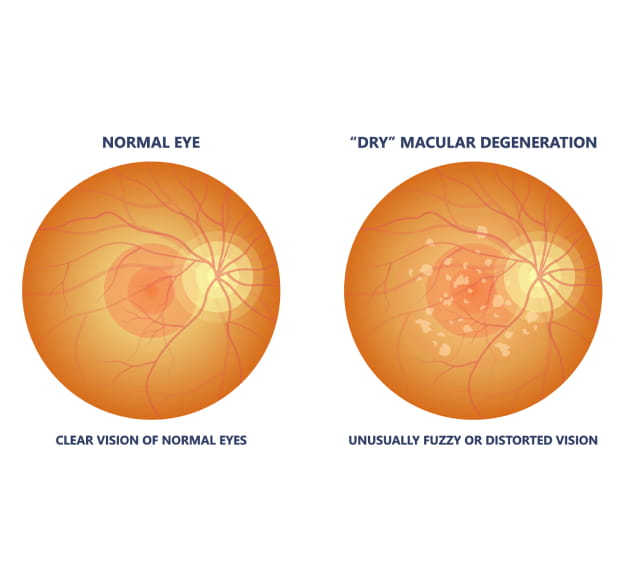
What Is Age-Related Macular Degeneration?
Age-related macular degeneration is an eye condition that affects the macula, the small central part of the retina responsible for sharp and detailed vision. The macula allows you to read, recognize faces, drive, and see fine details clearly.
AMD develops when the cells in the macula gradually deteriorate over time. While the condition typically does not cause complete blindness, it can significantly affect central vision, making everyday activities more difficult.
There are two primary types of AMD:
Dry AMD is the most common form and develops gradually as the macula becomes thinner with age.
Wet AMD is less common but more serious. It occurs when abnormal blood vessels grow under the retina and leak fluid or blood.
Regular comprehensive eye exams allow optometrists to detect early signs of AMD and monitor any changes over time.
Symptoms to Watch For
In the early stages, AMD may not cause noticeable symptoms. This is why routine eye exams are important, especially for adults over the age of 50.
As the condition progresses, some individuals may notice changes such as:
• Blurred or distorted central vision
• Difficulty reading or recognizing faces
• Straight lines appearing wavy or distorted
• Dark or empty areas in the center of vision
• Reduced brightness or contrast in images
If you notice sudden changes in your vision, it is important to schedule an eye examination as soon as possible. Early evaluation can help identify the cause and determine the most appropriate next steps.


Risk Factors and Prevention
While AMD is related to aging, certain factors may increase a person’s risk of developing the condition.
Common risk factors include:
• Age over 50
• Family history of macular degeneration
• Smoking
• High blood pressure
• Poor diet or limited intake of nutrients that support eye health
Healthy lifestyle habits may help support long-term eye health. Eating a balanced diet rich in leafy greens, protecting your eyes from ultraviolet light, and maintaining regular eye exams can help your optometrist monitor for early signs of retinal changes.
Our team provide ongoing eye health monitoring for patients, helping identify age-related eye conditions at an early stage.
Monitoring and Managing AMD
Although there is currently no cure for macular degeneration, early diagnosis and careful monitoring can help slow progression and protect remaining vision.
During your eye exam, your optometrist may examine the retina using specialized imaging technology to evaluate the macula and detect subtle changes. If signs of AMD are present, your optometrist may recommend ongoing monitoring, lifestyle adjustments, or referral to a specialist for additional care.
Protecting your vision begins with regular eye health assessments and open communication with your eye care provider.

Book Your Eye Health Assessment Today
If you are over 50 or have concerns about your vision, scheduling a comprehensive eye exam is one of the best steps you can take to protect your long-term eye health.
The team at Acuity Eye Care is here to provide supportive, personalized care and answer any questions you may have about macular health.
Book your eye exam today or contact your nearest clinic to learn more about protecting your vision.
Schedule an appointment today!
We will do our best to accommodate your busy schedule.